Table of Contents
Toggle📘 Introduction: Why 30 Days Can Change Your Grammar
Improve English grammar in 30 days for exams is not just a motivational line—it is a practical goal if you follow a structured approach. Many students spend months studying grammar, yet they make the same mistakes again and again. This happens because they focus on memorizing rules instead of understanding their application.
Grammar in competitive exams is not about writing essays; it is about identifying correct and incorrect usage quickly. Therefore, your preparation must be focused on clarity, practice, and repetition.
This article will guide you step by step with detailed explanations so that every concept becomes clear and usable in exams.
🧠 How Grammar Actually Works (Very Important to Understand First)
Before starting the 30-day plan, you must understand one important thing:
👉 Grammar is not memory-based—it is logic-based.
When you understand why a sentence is correct or incorrect, you will never forget it.
📌 Example:
❌ He don’t like tea
✅ He doesn’t like tea
👉 Explanation:
- “He” is singular
- So verb must also be singular → “doesn’t”
If you only memorize, you forget.
If you understand, you remember permanently.
📅 Week 1: Building Strong Foundation (Detailed Explanation)
📘 Day 1–2: Parts of Speech (Deep Understanding)
What are Parts of Speech?
Parts of speech are categories of words based on their function in a sentence. Every word you use belongs to one of these categories.
Types and Explanation:
- Noun → Name of person/place/thing
👉 Example: Ravi, Mumbai, book - Pronoun → Replaces noun
👉 Example: He, she, it - Verb → Shows action or state
👉 Example: run, eat, is - Adjective → Describes noun
👉 Example: happy, big - Adverb → Describes verb
👉 Example: quickly, slowly
📌 Example with Explanation:
👉 The smart boy runs quickly.
- Smart → tells about boy → adjective
- Boy → noun
- Runs → action → verb
- Quickly → tells how → adverb
Why This is Important?
If you don’t understand parts of speech:
- You cannot identify errors
- You cannot understand sentence structure
👉 This is the foundation of grammar
📘 Day 3–4: Articles (A, An, The)
Articles may look like very small words—a, an, the—but in competitive exams, they play a very important role. Many students lose marks because of incorrect use of articles. The main reason is that students either guess or apply wrong logic instead of understanding the actual usage.
Rule 1: Use “a” before consonant sound
👉 a university ✔
(“university” starts with ‘yu’ sound)
Rule 2: Use “an” before vowel sound
👉 an hour ✔
(“hour” has silent ‘h’)
📌 Example with Explanation:
❌ A honest man
✅ An honest man
👉 Because “honest” starts with vowel sound
Rule 3: Use “the” for specific things
❌ She is best player
✅ She is the best player
👉 “Best” is superlative → needs “the”
Why Students Make Mistake?
Because they focus on spelling, not sound.
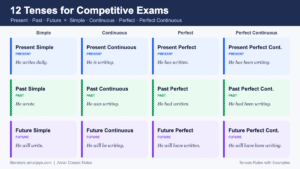
📘 Day 5–7: Tenses (Concept + Application)
Tense is one of the most important areas of English grammar, especially for competitive exams. It is not just about forms of verbs; it is about understanding when an action happens and how it connects with time. In simple words, tense tells us the time of action, but in reality, it also tells us the state, continuity, and completion of an action.
Many students think tense is only about formulas like has/have + V3 or is/am/are + V1+ing. This is where the problem begins. When you focus only on formulas, you forget the real purpose of tense, which is correct expression of time and meaning.
Common Mistake:
❌ I have seen him yesterday
✅ I saw him yesterday
Explanation:
- “Yesterday” = past time
- So present perfect is wrong
Another Example:
❌ She is knowing the answer
✅ She knows the answer
Explanation:
Some verbs (know, believe, understand) are stative verbs
👉 They do NOT take continuous form
Why This Topic is Important?
Tense questions are very common in exams
📅 Week 2: Core Grammar Topics (Detailed)
📘 Day 8–10: Subject-Verb Agreement
What is it?
The verb must match the subject in number.
📌 Example:
❌ The list of items are long
✅ The list of items is long
Explanation:
- Subject = list (singular)
- “of items” is extra information
Tricky Example:
❌ A number of students is present
✅ A number of students are present
Explanation:
“A number of” means many → plural
Why Students Fail Here?
Because they look at nearby words instead of real subject.
📘 Day 11–13: Prepositions
What are Prepositions?
They show relationship between words.
📌 Examples:
❌ Good in English
✅ Good at English
❌ Married with her
✅ Married to her
Explanation:
These are fixed expressions.
Why Difficult?
Because prepositions cannot be translated directly.
📘 Day 14: Revision
What to Do?
- Revise all topics
- Solve 50 questions
Why Important?
👉 Revision converts knowledge into memory
📅 Week 3: Application Stage
📘 Day 15–17: Error Detection
What is it?
You have to find mistake in sentence.
📌 Example:
❌ He don’t like tea
✅ He doesn’t like tea
Explanation:
Subject-verb agreement error
Skill Required:
👉 Fast identification of error
📘 Day 18–20: Sentence Improvement
📌 Example:
❌ She is more better
✅ She is better
Explanation:
“Better” is already comparative
📘 Day 21: Mixed Practice
Combine all topics and test yourself.
📅 Week 4: Exam Mastery
📘 Day 22–25: Mock Tests
Why Important?
- Improves speed
- Improves accuracy
📘 Day 26–28: Error Analysis
What to Do?
- Check mistakes
- Understand reason
Why Important?
👉 Mistakes = learning opportunity
📘 Day 29–30: Final Revision
Focus on weak areas.
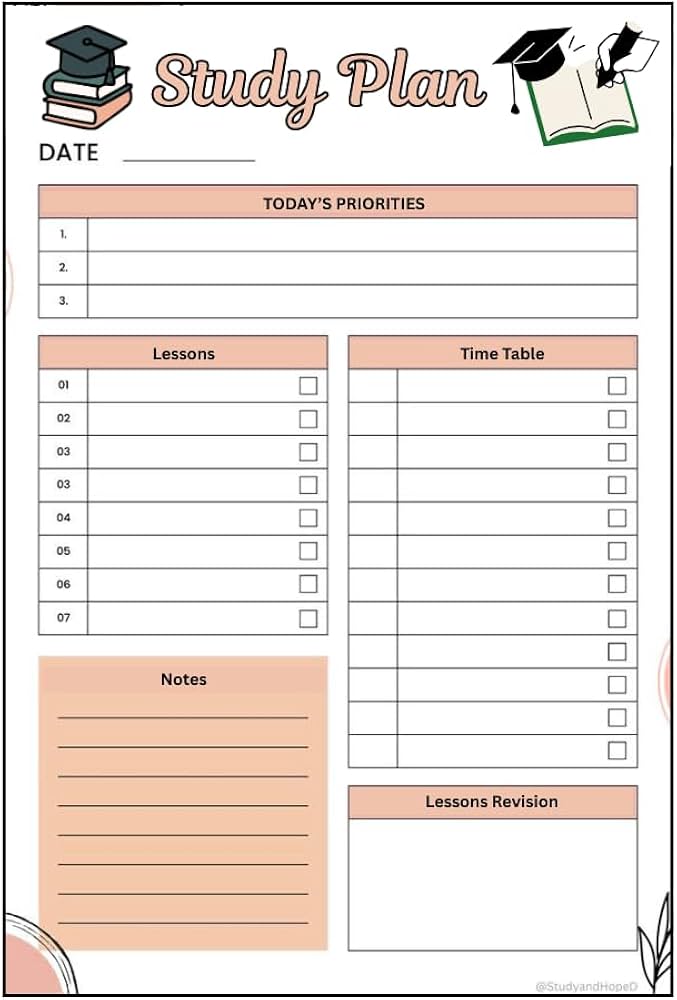
🧪 Daily Study Routine (Explained)
Step 1: Learn (30 min)
Understand concept deeply
Step 2: Practice (30 min)
Solve questions
Step 3: Revise (15 min)
Review mistakes
👉 This cycle builds mastery
🔴 Common Mistakes Students Make
- Memorizing without understanding
- Not practicing
- Ignoring revision
👉 These habits destroy preparation
💡 Power Tips for Fast Improvement
✔ Practice daily
✔ Maintain error notebook
✔ Focus on weak areas
👉 Consistency beats intelligence
❤️ Final Motivation
You don’t need to study for 10 hours.
👉 You need to study correctly.
30 days of discipline can improve your grammar significantly.
🎯 Conclusion
Now you clearly know how to:
👉 Improve English grammar in 30 days for exams
Follow this plan sincerely, and you will definitely see improvement.