Let’s start with a tiny test. Imagine your boss sends you a one-line message: “See me. Now.”
Your heart drops. Your palms go cold. You start rewinding the whole week in your head. What did I do wrong?
But what if that same message said: “Hey, got a minute? Nothing scary, I promise.”
Same request. Same person. Totally different feeling.
That tiny gap between those two messages is empathy. And empathy in business communication — the simple skill of talking and writing in a way that shows you understand how the other person feels — is worth a fortune at work. Let me show you why, with a true kind of story that plays out every single day.
The Sticky Note That Cost Nothing and Changed Everything
A few years ago, a small software company was about to lose a big client. The deal was worth around $40,000 a year. The client, a busy store owner named Rosa, was angry. Her system kept crashing. She had emailed support three times. Each time she got the same cold, robot-like reply:
“Your ticket has been received. Please allow 48 hours for a response.”
Rosa felt like she was shouting into an empty room.
Then a new support person, Daniel, picked up her case. He did not send a form. He did not use big fancy words. He wrote four simple words at the start of his email:
“Rosa, this sounds exhausting.”
That was it. Four words. Then he added: “You run a busy shop. The last thing you need is software that fights you. Let me fix this today, and I’ll call you when it’s done.”
Rosa stayed. She even sent Daniel a box of cookies.
Nothing about the software changed in that moment. The only thing that changed was that someone made her feel seen. That is the quiet power of caring communication. It does not cost money. It does not need a big budget. But it can save deals, careers, and friendships.
So, What Is Empathy in Business Communication, Really?
Let’s keep this simple.
Empathy means trying to feel what another person feels. It means stepping into their shoes for a moment before you speak or type. Doing that at work is the whole idea. It means writing your emails, chats, and messages in a way that shows you understand the other person’s feelings, not just their words.
Here’s a plain way to think about it. Most people communicate to be understood. Empathetic people communicate to make others feel understood.
That one flip changes everything. You are still saying the same facts. You are still asking for the same things. But you are wrapping those facts in warmth. And people remember warmth long after they forget facts.
People will forget what you said. But they will never forget how your message made them feel.
Why Empathy in Business Communication Is Not “Soft” — It’s Smart
Some people hear the word “empathy” and roll their eyes. They think it is soft, weak, or a waste of time. “This is business,” they say. “We don’t have time for feelings.”
But here is the funny truth. Feelings are the whole game. Every deal, every sale, every “yes” comes from a human being. And human beings decide with their hearts first, then explain it with their heads later.
When a customer trusts you, they buy more. When a teammate feels respected, they work harder. When an angry client feels heard, they calm down. Empathy is not the opposite of results. Empathy is the shortcut to results.
And studies show empathy boosts results in real, measurable ways — happier customers, stronger teams, and fewer people quitting. This is not a fluffy idea. It is a business tool hiding in plain sight.
The Shock Absorber Idea (Why Empathy Matters, in One Picture)
Picture a car driving down a bumpy road. The road is full of holes and rocks. But inside the car, you barely feel a thing. Why? Because of the shock absorbers. They are hidden parts that soak up the bumps so your ride stays smooth.
Empathy is the shock absorber of business communication.
Work is full of bumps. Late projects. Angry emails. Mistakes. Bad news. Tight deadlines. You cannot remove those bumps. They will always be there. But empathy soaks up the shock. It turns a hard message into a bearable one. It turns a scary talk into a safe one.
Nobody claps for the shock absorbers. But take them out, and every little bump becomes painful. That is why the best communicators are not the loudest or the smartest. They are the ones who cushion the ride for everyone around them.
The Empathy Traffic Light: A Simple Framework You’ll Actually Remember
Okay, here is something you can use for the rest of your life. I call it the Empathy Traffic Light. Every word you send at work falls into one of three colors: Red, Yellow, or Green. Just like a traffic light.
Red Words (Stop — These Push People Away)
Red words are cold, sharp, or blaming. They make people feel small, guilty, or attacked. They slam the door shut. For example:
- “As I already told you…”
- “That’s not my problem.”
- “You should have…”
- “Per my last email.” (This one is famous for hiding anger.)
- “Calm down.”
Red words might feel good to type when you are frustrated. But they always cost you. They turn a small problem into a fight.
Yellow Words (Slow Down — Cold, but Not Cruel)
Yellow words are not mean. They are just flat and lifeless. They are the language of robots and forms. For example:
- “Noted.”
- “Per company policy…”
- “Your request is being processed.”
- “Kindly do the needful.”
Yellow words are safe but forgettable. They get the job done, but they leave people feeling like a number, not a person.
Green Words (Go — These Pull People Closer)
Green words are warm, human, and kind. They show you see the person on the other side. For example:
- “That makes sense.”
- “I hear you.”
- “Let me help you with that.”
- “I’m sorry this happened. Here’s what I’ll do.”
- “Thank you for your patience — I know waiting is frustrating.”
Green words cost nothing extra. They take the same time to type. But they change how the whole message lands.
Here is the magic move: catch yourself before you hit send. Ask, “Is this Red, Yellow, or Green?” If it’s Red, cool down. If it’s Yellow, add one Green line. You do not have to be perfect. You just have to add a little more Green.
Let’s See It in Action: 3 Real Rewrites
Talk is cheap. Let me show you the difference with real examples you can copy today.
Example 1: The Repeated Question
Red: “I already answered this. Check your email history.”
Green: “Good catch bringing this up again — I know inboxes get messy. Here’s the answer once more so it’s easy to find.”
Same facts. One makes the person feel dumb. The other makes them feel helped.
Example 2: Saying No to Your Boss
Yellow: “I can’t do this by Friday.”
Green: “I really want to get this right for you. Friday is tight because of the Miller project. Could Monday work? Or I can rush a simpler version by Friday — your call.”
The first sounds like a wall. The second sounds like a teammate. And notice — you still said no to Friday. Empathy does not mean saying yes to everything. It means saying even the hard things with care.
Example 3: The Angry Customer
Red: “Our policy clearly states no refunds after 30 days.”
Green: “I completely understand why you’re upset — nobody likes feeling stuck. Our usual rule is 30 days, but let me see what I can personally do for you here.”
The first quotes a rulebook. The second sounds like a human who cares. Which company would you come back to?
Rules protect the business. Empathy protects the relationship. The best companies use both.
The Deep Secret: Empathy Starts With Listening, Not Talking
Here is something most people get wrong. They think empathy is about saying the perfect kind words. But real empathy starts one step earlier. It starts with listening.
You cannot cushion a person’s feelings if you do not know what they are feeling. And you cannot know what they are feeling if you are only waiting for your turn to talk.
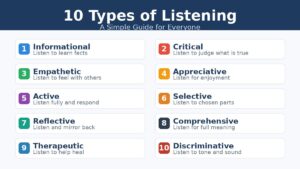
Real listening — sometimes called active listening — means fully focusing on the other person instead of planning your reply. It sounds easy. It is actually hard, because our brains love to jump ahead.
Here is a simple test. Next time someone talks to you, notice this: are you listening to understand, or listening to reply? Most of us listen to reply. We hear the first few words, decide what we think, and stop truly listening.
When Rosa emailed “Your system keeps crashing,” her words were about software. But her feeling was, “I’m scared I’m losing money and no one cares.” Daniel heard the feeling, not just the words. That is why “this sounds exhausting” worked so well.
Try This Today: The One-Word Warmer
Here is a tiny experiment you can run in the next hour. I call it the One-Word Warmer. Open the last three work messages you sent. Now, in each one, add just one warm word or one short warm line at the very start. Not a whole paragraph. Just one small human touch.
- Before: “Here’s the report.” After: “Happy to help — here’s the report.”
- Before: “Can you send the file?” After: “Hope your morning’s going well — can you send the file when you get a sec?”
- Before: “This is wrong.” After: “Quick note — I think there’s a small mix-up here. Let’s fix it together.”
That’s it. One word. One line. It takes five seconds. Do this for one week and watch what happens. People reply faster. People are nicer back. Tension drops. You will feel it.
The Three Biggest Empathy Mistakes (And How to Fix Them)
Even good people mess this up. Here are the three most common traps, and how to escape each one.
Mistake 1: Fake Empathy
This is when you copy-paste warm words without meaning them. “We deeply value your business” — sent to an angry customer 30 seconds after they complained. People can smell fake from a mile away. Fix: be specific. Instead of “we value you,” say “I can see you’ve been a customer for two years, and this must be frustrating.” Details prove you actually looked.
Mistake 2: Empathy Without Action
Saying “I understand” and then doing nothing. This is just noise. Feelings are step one. Fixing the problem is step two. Fix: always pair the feeling with a plan. “I get why you’re upset. Here’s exactly what I’ll do next.”
Mistake 3: Drowning in Empathy
Some people over-apologize so much that they seem weak or unsure. “I’m so so sorry, this is all my fault, I feel terrible…” for a tiny slip. Too much makes people nervous. Fix: say it once, clearly, then move to the solution. Calm confidence is its own kind of kindness.
Empathy Is a Muscle, Not a Gift
Here is the best news in this whole article. You do not need to be born with empathy. It is not a special talent that only some lucky people have. It is a muscle. And muscles grow when you use them.
Every warm email you write makes the next one easier. Every time you pause before hitting send, you get a little better. Every time you ask “how would I feel if I got this message?” you build the habit.
The people who seem naturally kind at work are usually just people who have practiced for years. You can start practicing today. Right now, in your very next message. You do not have to change your whole personality. You just have to add a little more Green to your words.
Why This Matters More Than Ever
We type more than we ever have. Emails, chats, texts, comments. And typed words are dangerous, because they have no face, no voice, no smile.
When you talk face to face, your tone and your eyes do half the work. But a typed message is naked. The reader fills in the tone themselves. And guess what? When people are stressed or busy, they usually fill in the worst possible tone. That neutral “Ok.” you sent? The reader might read it as cold and angry.
That is why empathy in typed communication is not a nice extra anymore. It is a must. Because your words are traveling alone, with no warm voice to protect them. The only warmth they carry is the warmth you put in on purpose. So put it in on purpose. Every time.
Your Simple Empathy Checklist (Save This)
Before you send any important message at work, run through these five quick questions:
- How does the other person probably feel right now?
- Did I start with even one Green (warm) word or line?
- Did I quote a rule when I could have offered help instead?
- Did I pair any feeling with a real action or plan?
- If I received this exact message, how would it land in my heart?
Five questions. Ten seconds. A whole different result.
Empathy at Work: Quick Wins for Emails, Meetings, and Chats
Empathy in business communication looks a little different depending on where you use it. Here are fast, real ways to add warmth in the three places you spend most of your day.
In Emails
Start with one line about the person before you jump into your ask. “Hope your week is off to a calm start” takes three seconds and softens everything that follows. End with a clear next step so the reader never feels lost. And read your email out loud once before sending — if it sounds cold to your own ears, it will sound colder to theirs.
In Meetings
The kindest thing you can do in a meeting is let people finish their sentences. Do not jump in. Do not talk over the quiet ones. When someone shares an idea, say their name and thank them: “That’s a smart point, Priya.” People open up when they feel safe, and safe teams solve problems faster.
In Chats and Messages
Short chats feel the coldest, so add tiny warmth. A friendly emoji, a “no rush,” or a quick “thank you” can turn a flat message into a friendly one. And when you must give hard feedback, never do it in a one-line chat. Pick up the phone or meet in person. Hard news deserves a human voice.
None of this is complicated. It is just the same idea, used everywhere: treat the person on the other side like a person. Do that, and your words will open doors that pushy, cold messages slam shut.
Common Questions About Empathy in Business Communication
Is empathy in business communication a skill you can learn?
Yes, completely. Empathy is not a magic gift some people are born with. It is a habit you build with practice. Every time you pause before sending a message and ask “how will this feel to read?”, you get a little better. Start small, stay steady, and it becomes natural within a few weeks.
Does being empathetic make you look weak at work?
No. In fact, it is the opposite. It takes real strength to stay calm and kind when you are stressed or when someone is rude to you. Empathy is not about being a pushover. You can still set firm limits, say no, and share hard news. You just do it with warmth instead of coldness.
How do I show empathy in a short chat or text?
Add one small human touch. A quick “no rush,” a “thank you,” or a friendly word at the start softens the whole message. And save hard feedback for a call or a face-to-face talk. Short, cold chats are where most misunderstandings are born, so a little extra warmth goes a long way.
What is the fastest way to sound more empathetic in emails?
Open with one line about the other person before your request, and read your email out loud once before you send it. If it sounds cold to your own ears, it will sound colder to theirs. Swap blaming words for helping words, and always pair any feeling with a clear next step.
The Bottom Line
Empathy is not about being sweet or fake or slow. It is about being human on purpose, especially when it would be easier not to. It is choosing “this sounds exhausting” over “your ticket has been received.”
It is remembering that behind every screen is a real person with a real bad day, a real deadline, and a real heart. Business is not really about money, or products, or emails. It is about people. And people remember who made them feel seen.
So the next time you are about to send a cold, quick, careless message, pause for one breath. Add a little Green. Listen for the feeling. Be the person who cushions the bump. Because in a world full of robot replies, the warmest human in the room always wins.
Now go send one warm message. Someone out there needs it more than you know — and if this helped you, share it with someone whose inbox could use a little more empathy today.